Actions speak louder than words, and yet, once spoken, they will hear your words for a lifetime.
ElizabethMozley
WeShareTheSameSky
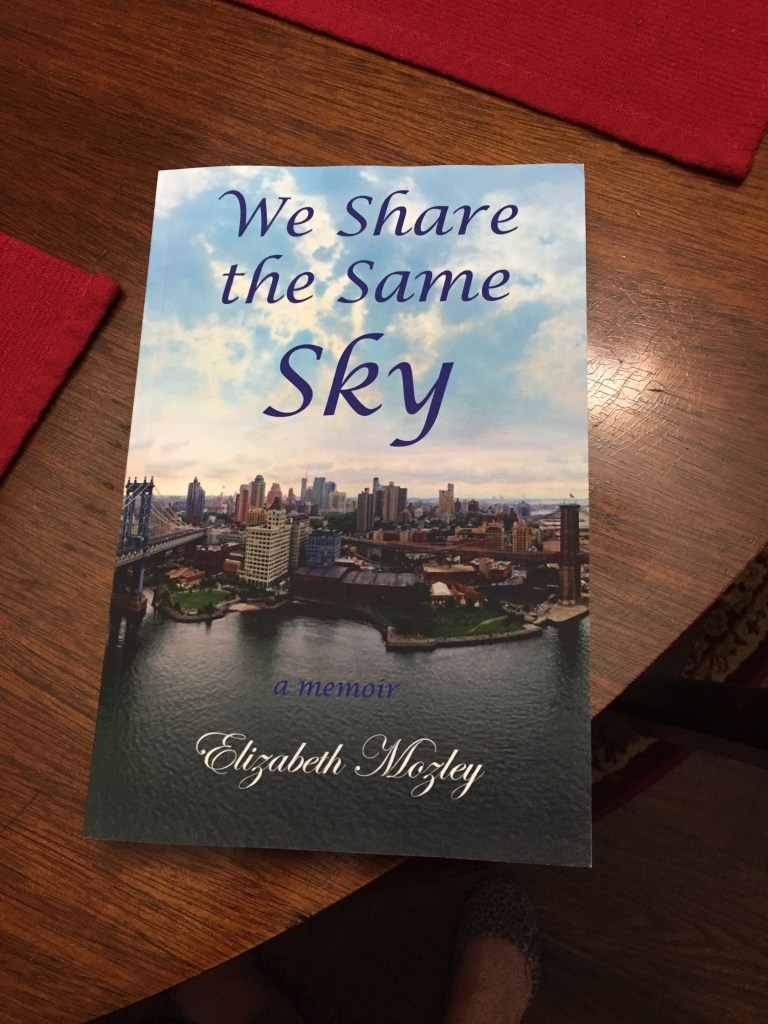
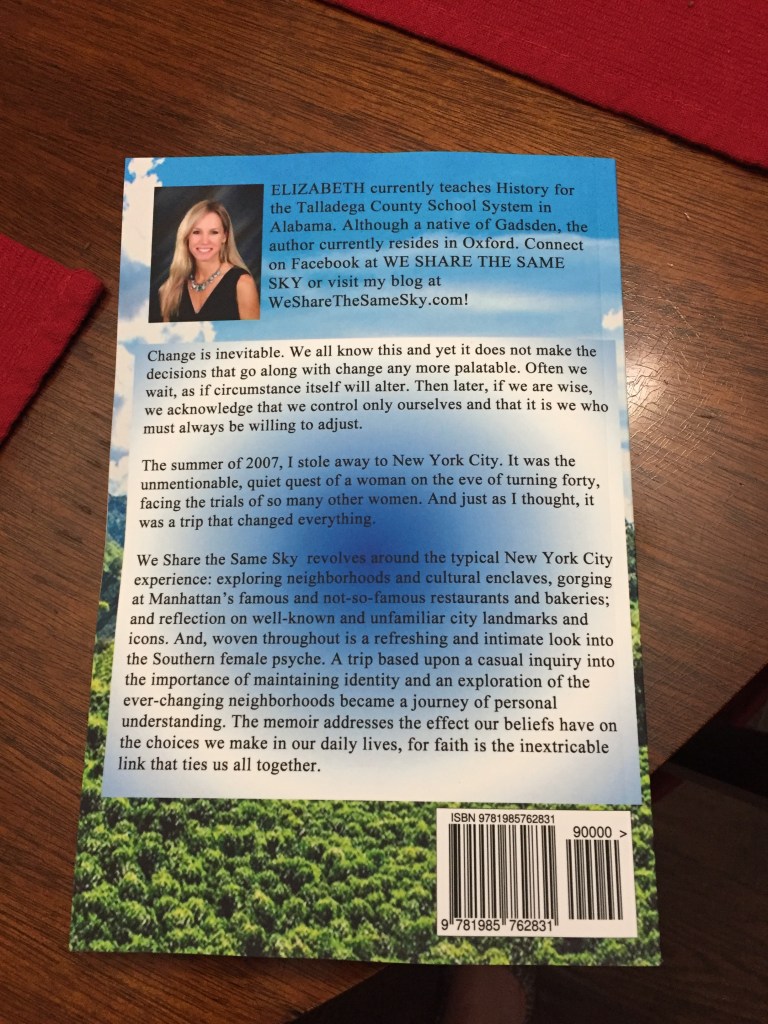
WE SHARE THE SAME SKY is available on Amazon 💛 https://www.amazon.com/Elizabeth-Mozley/e/B00J7KJWIU


Actions speak louder than words, and yet, once spoken, they will hear your words for a lifetime.
WE SHARE THE SAME SKY is available on Amazon 💛 https://www.amazon.com/Elizabeth-Mozley/e/B00J7KJWIU
The human spirit calls out, seeking a hero. My Pop-Pop was that man. He left his WWII account of the landing at Anzio. Available on Amazon ~FROM HERE TO THERE, THE LONG WAY HOME.
FROM HERE TO THERE, THE LONG WAY HOME ~ T. E. Stephens; published by Elizabeth Mozley
WWII, The Italian Campaign
“One seems to learn fast, and we’re bound together in the knowledge that nowhere else does a man learn to trust his fellow man. The weakness of one man may cause the death of others. Out of all this comes the strength, the pride, and trust of one another. Some of the men may have hid their fears by talking a lot, others making wisecracks and jokes, while others just kept silent. I guess I tried to hide my fears by just smiling.”
In the early 1980s my grandfather, Timmie E. Stephens whom we lovingly called ‘Pop Pop’, bequeathed his brief memoir of World War II to our family members as a surprise Christmas gift. Until that time, I had only thought I knew the man.
Pop Pop’s memoir chronicles his service as a soldier during the Italian Campaign, from Anzio to the Po Valley, with the 135th Infantry. Short stories are scattered throughout his reflections and include: arriving in Casa Blanca, the Anzio landing, hand-to-hand combat with a lone German soldier, several trips to the Evac Hospital, a buddy going AWOL, rescuing an unknown G.I., finding a wine cellar in a vineyard and singing to the men as they got blisteringly drunk, holding-up with Italians in the countryside, singing gospel songs he wrote to his buddies as they sat around their foxholes and watched phosphorus shells bursting overhead, the barrage of messages from Propaganda Sally, seeing Prime Minister Winston Churchill as he toured the Italian front near Rome, the letters from home -the stories go on and on.
My grandfather’s account of his time on the front came to an end as his unit moved into the Po Valley. Here, he was severely burned and sent to the hospital for almost a year. While there, he witnessed the eruption of Mount Vesuvius, and later, returned stateside on the John L. Clem, U.S. Army Transport and Hospital Ship. After several stays at intermediate hospitals, he was admitted to Northern General Hospital in Tuscaloosa, Alabama which at that time was the world’s largest burn hospital, specializing in skin grafts. During this time he was recruited by the government to participate in a War Bond Tour, which put him right back in Gadsden, Alabama speaking before friends and family.
As children, my cousins and I didn’t see the wounds. We saw things clearly, people clearly, the way children do. We saw our Pop Pop for the man he was, radiating goodness and joy from within some inner, ceaselessly brimming, well.
Memories can be funny things, but those of my childhood remain clear. Our grandfather was a good man. He radiated unfettered love like the sun relinquishes its heat out into the world. Pop Pop taught us young’uns (his word) about God. He taught us when we stood beside him, following his movements as he grasped handfuls of white bread and held it up into the air. We stood beside him in the knee high water of the murky Coosa River and waited for the ducks which must have watched from overhead for this old man who beckoned daily. And down they would come in swoops so close that we trembled in fear at the onslaught of such undisciplined beasts.
Bird in the brush, tune in your heart; life was pure and simple in his eyes. Hard work and pleasure went hand in hand. He would call us to him, show off his newest creation -a miniature water wheel in the front courtyard; a sunken porcelain claw foot tub filled with fresh dirt, compost, and red worms for fishing. He taught us about the fruits of the Catawba trees -you know, it’s worms! The fish we would surely catch filled our dreams, and his.
The knowledge he shared, the lessons he taught, are the things I still believe. They are the way I see the world. And through his appreciative eyes the world is beauty all around. Never will I forget his influence on my young life, the pride I felt when we listened to him quietly play his guitar in church, singing a hymn he had recently penned. Never will I forget sitting near as he shared his stories of Anzio and the brave men he called ‘buddies,’ nor the sacrifice he so willingly made for our country.
Elizabeth Mozley
Now Available On Amazon!
https://www.amazon.com/Elizabeth-Mozley-McGrady/e/B00J7KJWIU/ref=ntt_dp_epwbk_0
WWII #Anzio #ElizabethMozley #FromHereToThereTheLongWayHome #memoir #WeShareTheSameSky #infantry #ARMY
Travel when you can – hop a flight, ride the train, or just step out of your own back door and roam! Join me for a week roaming New York City & reflecting on growing up in the rural South! amazon.com/Elizabeth-Mozl…
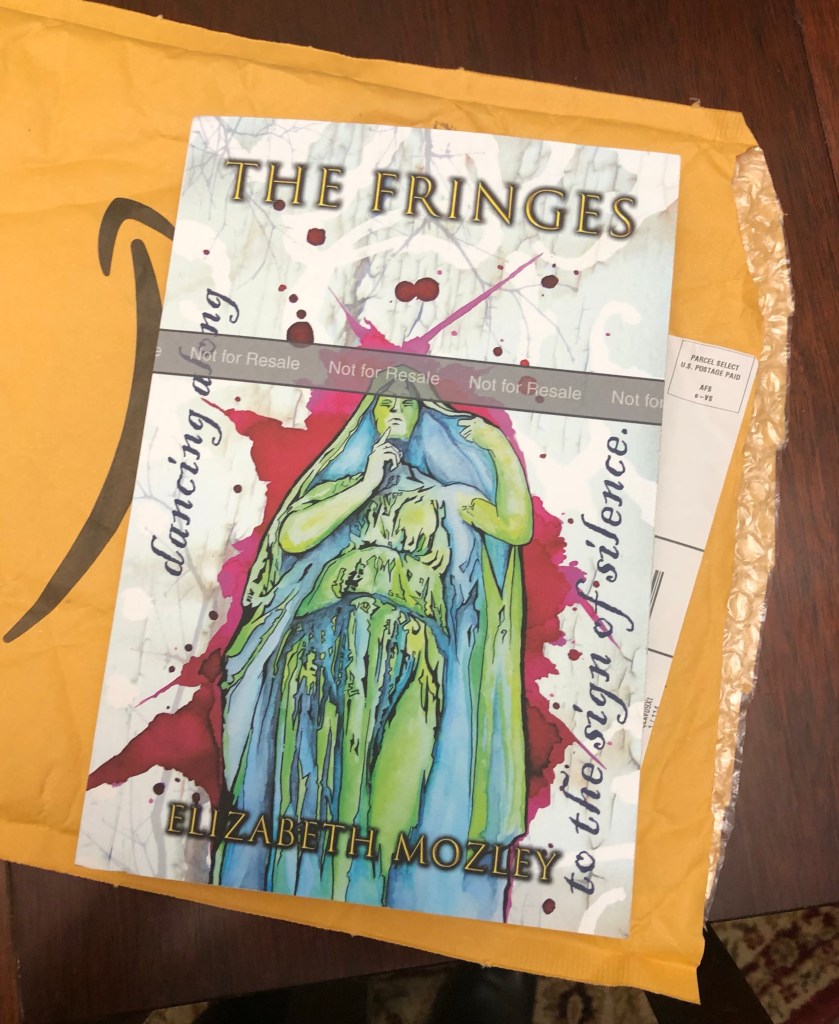
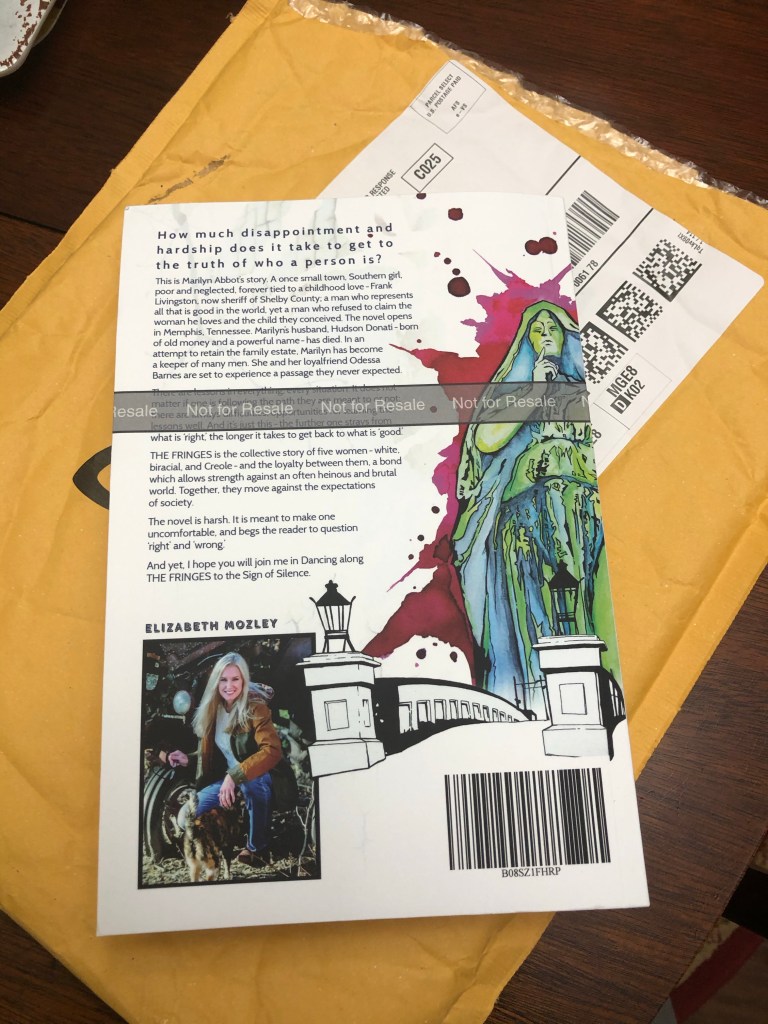
Dancing Along THE FRINGES To The Sign Of Silence is Southern Gothic through and through.
A subgenre of Gothic fiction in American literature, the story takes place in the American South. The elements of deeply flawed, disturbing & eccentric characters, hoodoo, decayed & derelict settings, grotesque situations, & sinister events stemming from poverty, alienation, crime & violence are knitted like a finely spun web.
Join me in the reading of Dancing Along THE FRINGES To The Sign Of Silence!
ELIZABETH MOZLEY @ElizabethMozley
Available for purchase on Amazon: https://www.amazon.com/kindle-dbs/author?ref=dbs_G_A_C&asin=B00J7KJWIU
REVIEW:
“Put down that Harlan Coben or James Patterson book you’re reading and instead pick up this novel by Elizabeth Mozley.
Why? We read to escape, but we also read to connect with characters who are a little bit like us. The distance that words written on a page provide allow us to experience excitement and danger vicariously.
There is plenty of treachery in this novel, and there is an abundance of love. There is something about stories set in the American South like this one is.
Like any good Southern Gothic there are graveyards and bastard children and nostalgia for the past. Through the five women around which this story unfolds, Mozley examines the values of the South such as loyalty and deeply ingrained decorum.
That is not to say that all is well in Memphis. With the mix of strong women and coarse men, violence is never far away and the bonds of loyalty fray. There are entanglements aplenty with the usual culprit at the center…money and sex.
The passages of dialogue ring true and the pacing of the story keeps you turning the pages. There is even travel to a place far away from Tennessee–both distance and culturally–that came as a surprise.
If the old adage to write what you know is true, Mozley knows a thing or two…
I think this book is worth your time reading…compelling dialogue makes an interesting movie.
So what are you waiting for Hollywood? Option this book. It will be a hit on Netflix… Seriously, order it today.”
Don Jacobson @BigSurfDon
Joe Wood & Susan Stone Evans guess what came in today~ the proof! “Dancing along THE FRINGES to the Sign of Silence” is in hand. Thank you, Joe for the gorgeous cover & Susan, thank you for interior layout.
I couldn’t have done it without you.
After a final proofing, the novel will be available on Amazon: https://www.amazon.com/Elizabeth-Mozley-McGrady/e/B00J7KJWIU/ref=ntt_dp_epwbk_0
#ElizabethMozley
#TheFringes
What is in a Sunday morning?
Peace, quiet reflection, prayer, appreciation…
#elizabethmozley #wesharethesamesky https://www.amazon.com/Elizabeth-Mozley-McGrady/e/B00J7KJWIU/ref=ntt_dp_epwbk_0
At Last! THE FRINGES will publish this month!
FB post 2 years ago today, January 1, 2019:
——Bill Bradley said, “Ambition is the path to success. Persistence is the vehicle you arrive in.”
Didn’t make my self-imposed deadline, but I am 352 pages in & one chapter shy of finishing the novel. Then on to the re-write.
TODAY, I am excited to announce that Dancing Along THE FRINGES To The Sign Of Silence will publish in a few weeks!
Honestly, of all I’ve written, THE FRINGES has been the most enjoyable. I never knew in advance what Marilyn, the main character, would do. It wasn’t until pencil touched paper that the scene became clear; for once created, characters take control of their lives on paper, leaving the writer to document what they reveal.
Many times, I shook my head, paused and asked myself, “Am I willing to write this?”
You see, Marilyn Abbot Donati is unscrupulous, cunning, vengeful -and yet she is protective, caring, loyal. She does the unthinkable, unabashedly.
Don’t we all wish we could, at times?
THE FRINGES begs the reader to question ‘right’ and ‘wrong.’ The story is meant to make you uncomfortable.
A huge ‘thank you’ to Susan Evans for interior layout design & Joe Wood for painting such a fantastic cover- ah, the blood spatter!
I am so looking forward to seeing it in print & hope you all will join me in the reading.
Elizabeth Mozley
https://www.amazon.com/Elizabeth-Mozley-McGrady/e/B00J7KJWIU/ref=ntt_dp_epwbk_0

CENTIPEDE is the story of an eleven year old child, who when faced with seemingly insurmountable odds, survives and succeeds in obtaining the life every child deserves.
Willa Cather Jennings, who detests her given name and therefore goes by Willie, is the lone survivor of her family’s harrowing murder. Consumed with emotion, she finds herself traveling with Thomas, the manic depressive stranger, who stepped in to save her.
The two travel together through North Alabama, the Appalachia to the Outer Banks in North Carolina before arriving in Savannah, Georgia where they join his sister Jane. Along the way, Willie’s dependency on Thomas turns to trust; he, in turn, finds new meaning in life through his friendship with the child.
In Savannah, Willie -who grew up in a fragmented and impoverished family -finds comfort, happiness and belonging. But, just as she comes to terms with her past and embraces her future, Thomas returns to Alabama seeking vengeance and Detective Nicholas Cox, an old friend of Willie’s mother who has been searching for the missing child, pieces the past and present together.
~Several years ago, my students asked why I had not written a book for them; it was then that the idea for Centipede was born.
As a teacher, the majority of my time is spent with children. At the end of the day, many return home to ideal family settings; many more do not. There are some who rarely see their parent or guardian and so they’ve learned to fend for themselves. Willie is one of those children. You know the kind -the kid who is self-resilient, who harnesses the magical power of imagination to make it through the especially rough times.
Many children live in a low socio-economic area; the poor are quietly poor. When I read parts of Centipede to my students, I saw recognition as they acknowledged the similarities between the heroine’s life and theirs, and how her indomitable spirit mirrors their own.
I hope you enjoy the novel!
Elizabeth Mozley https://www.amazon.com/Elizabeth-Mozley-McGrady/e/B00J7KJWIU/ref=ntt_dp_epwbk_0
I knew when I wrote the scene in CENTIPEDE where Willie runs through the tall grass along the waters of Muscle Shoals that this would be the song the air carried!
Excerpt from CENTIPEDE:
In the following weeks, Willie found there was something mystical about Florence and Muscle Shoals, Alabama. Here, further north, she found the mountains more craggy, the Tennessee River powerful and strong, streams teamed with wildlife. Green grasses grew in clumps along the river banks; in the surrounding fields the grass blades were so fat they had to be double the size of any she had ever seen. And, the breeze that lifted, drifted out across the river brought back strange exotic smells that played rich upon the nose, an odd scent that smelled both dirty and clean at the same time.
Willie paused in her walk, noticing that she felt something similar to how she had felt before losing her family. At first she couldn’t put her finger on it. But, as she moved through the tall grasses and raised her face to the gentle breeze, she understood it was the feeling of being part of nature. For this, she was thankful. She knew she would never be the same again but at least she didn’t feel as broken. Just lonesome and sorry that she no longer had Cotton and her mother. Missing them was the hardest part. But the deep, restless worry that had plagued her was losing its hold on her mind and she was learning to once again see the things around her, appreciate nature and the comfort it contained.
Slowing, she tilted her head, listening intently. The low melodic winds blowing across the river blended with the sound of its gurgling urgency; together they seemed to sing. Willie took flight, running through the woods before her, beneath the tall pines and evergreens, over the mounds of deep, tall grass, trailing her fingers against the blades. The faster she ran, the louder the music and enchanted singing hummed against her ears.
There is magic here, she realized.
At the middle of the field almost hidden from the tall razor edged grass, Willie came to a sudden halt and squatted down on her haunches. She gazed steadily toward the wood line and listened intently to the katydids clattering in the distance. They seemed to rise and draw closer as if they were moving toward her. She closed her eyes and heard them draw nearer. Opening her eyes she noticed the dense growth of trees around her. They too had come closer! A sly smile spread across her face. Indians are here, shiftin’ on quiet feet behind the trees as they watch me, the blonde girl, interloper in their woods!
A gathering of crows, their dark bodies frenetically moving, flying among the uppermost branches suddenly lit and began their raucous squawking. She stood very still and sniffed the air, sucking in the clean freshness of it. Like fuel, it lit her from within and she set off running again, her movement liquid like a too-full creek, like water forced between smooth stones, movement tunneled too long and then freed to rush up and outward, directionless.
Run! Run! Run! The shoals called across the fields. So Willie did, and the shoals rewarded her with a song…
“Well, good moooornin’, Captain. Good moornin’ to you, Sir –Hey heeey yeaah. Oh, do you need another mule skinner, Down on your new mud run? Hey heeey yeah. Yodel –a-eeeee-he-he, He-he-he-he-he-he…”
Willie reached out and grabbed the song as she ran, made it her own. She might not know about mule skinning but she knew all about running free.
Dolly Parton, “Mule Skinner Blues”. https://youtu.be/Fwc1FkkWulc

Due to unforeseeable circumstances, I will not be attending the International Book Fair this week in Bucharest, Romania. I had so looked forward to the opportunity to talk with you about your beautiful country. I further regret being unable to share with you some of the rich history of the Southern United States; reflections of growing up here in Alabama, coupled with excerpts from WE SHARE THE SAME SKY.
What I can do, however, is post an abbreviated version of what I’d intended to share. I’ve not included the self-introduction. The lecture is rather long, so there is the necessity of posting it in segments. And, rather than moving through the text and rewriting what I’d highlighted in the chapters, I will instead post the entire chapter.
I will miss meeting you all.
Sincerely,
ELIZABETH MOZLEY
PART ONE, LECTURE FOR ROMANIA
I began writing WE SHARE THE SAME SKY following my return from a summer trip I took alone to Manhattan the summer I turned forty. I was contemplating a major change in my life and knew that the time away would give me the space I needed to think and see things more clearly. With children in the house, money spent toward a trip for myself –rather than a family vacation- filled me with guilt. So, I needed a second reason, one that might alleviate what felt like self-indulgence. I decided to write about my week in the city and include the history of the boroughs and enclaves of Manhattan, the cultural beauty of the place, the ever-changing neighborhoods that continue to foster a sense of belonging for our immigrants.
While I expected to get caught up in the magic that is New York City, I didn’t expect my mind to constantly jump back to the South. Throughout these days of wandering, images of home and memories of my childhood kept pressing in on me, as if demanding recognition.
You see, I was missing family; I was missing place. There simply is no getting away from who you are or where you are from. Place retains its significance to the human spirit because we tie to it the emotions of our memories. Being Southern means having a relationship with the land, a relationship with nature.
Being away, immersed in that immense, fascinating city, I could more easily reflect on the past, the people and events that made me who I am. The week in Manhattan actually helped me reconnect.
I’ve heard it said that as children, we are closer to our true selves, that we know our passions. I think this is true. It is only later when we are busy being adults that we slip up and forget.
(Excerpt from WE SHARE THE SAME SKY)
“There is as much dignity in plowing a field as in writing a poem.”
—Booker T. Washington
Awakening, I move about in a stupor and realize that the bed is unfamiliar. The pillow is unfamiliar. The sounds coming from outside my window –all are unfamiliar. Slowly remembrance sinks in and settles like freshly poured concrete. I am snuggled safely within the city I adore! In the subdivision in Rainbow City where I live, there is a small farm down the street that sits so charmingly out of place. Grandfathered in when our neighborhood was developed, the old farmhouse and tiny field remain. Every morning I am graced with the sounds of the family’s rooster trilling and the donkey baying for his morning meal. Here, the glare through the window forces me awake. And yet, thanks to the sound ordinance, rarely does one hear the frustrated, incessant blaring of aggressive horns. I have over-slept and awakened with the capricious nature of an unruly child. Pulling aside the curtain, I take a peek outside, mouth a quiet thank you to Him.
Late last night, I listed everything I want to cram into my day. Far and wide, my desires are spread from Upper West Side through Midtown and Upper East Side. Locating my list on the map, I realize that I will be all over the place. But really, who cares? It is not as if I am following a dreaded agenda. Flip of a coin, shake of the Magic 8 Ball; perhaps I have been going about my decision making all wrong. So, sensibility will not dictate my path, at least not today!
Morningside Heights
Is there anything better than sliding into a taxi when you know you are in for a long day? I don’t think so. As I get in and arrange my things, I notice the driver is talking on the phone. Hating to be rude, I jot down the address and hand it to him, trying to smile. He never makes eye contact and never hangs up the phone. Ill-mannered people get on my nerves and my pet peeve is rude cell phone use. Maintaining my silence, I sit behind him and seethe, wanting to tell him to please get off the phone and drive because frankly, he is scaring the hell out of me. I fantasize about reaching from behind and snatching the phone from his hand and flinging it hard out the window –something my father would do. And yet, I know that when he lets me out, I will tip the inconsiderate ass any-way. My mother reminded me several weeks ago that unless one speaks their mind when they are displeased, they have no right to be resentful. Regardless, I am full. And, I am irritated with myself for letting something shake the sense of inner peace I awakened with. In the South, protestant church signs post words of wisdom each week. My favorite is the adage “He who angers you, controls you.”
The driver drops me intact at The Morningside Heights Greenmarket located at 116th Street and Broadway. While planning, I discovered that the market is sponsored by Columbia University and Barnard College. Amazed by the selection of fresh produce in the city, I find myself constantly comparing it to what we have back home. Surprisingly, it seems there are many more open markets available here.
Quickly, I purchase a pint of the plumpest blueberries and wish for some fresh yogurt. The apples are gorgeous. There is one variety that looks similar to those my grandmother Libby called horse apples. Although the skin of these apples is not the prettiest, they always have a good tart taste that makes them perfect for apple pie and apple butter.
Looking over the boxes before me, I think back on my fifth grade year when before morning announcements or even the pledge was completed, I was hauled into the Principal’s office to stand before Dr. Leftwich.
“It has been rumored,” she said “that you have been stealing apples from a nearby yard and selling them on the bus. Miss Mozley, being industrious is one thing, but thievery is quite another.”
My grandmother always reminded me to pause before answering and so I did. I knew that the man who owned the place had seen me a couple of afternoons as he sat out on his back porch. The tree I had chosen the day before was close enough that I had noticed he was drinking tea and cracking pecans as he read The Gadsden Times. I also knew that he didn’t mind or he would have said something. I even hoped that he liked me, although I never saw him smile. Yes, he liked me and he appreciated the fact that I enjoyed his trees, his apples. After all, he had dropped the paper to below eye level and watched as I gathered them in my shirt and climbed back over his fence.
He was not the one who reported me. I knew this. But regard-less of who had, I was either in for a good scolding or a paddling. But, not both; Dr. Leftwich was known for giving one or the other. My only hope was that she wouldn’t call Papa. Double or nothing I thought, then replied, “Yes, ma’am. I’ve been doing just that.”
The following day –because she did not paddle me or even call my father –I left a rosy store-bought apple on her desk. I didn’t think a note was necessary.
What is it about picking your own produce that makes the taste more intense? My children swear that the apples they pick from our trees to bake each morning are better than those from the store and I believe them.
Apples purchased from the grocer sit prettily in the glass dish on our dining room table almost forgotten. It is as if they are there for the eye rather than the palate.
Each year, the children and I look forward to visiting an orchard. For years, we picked our own from an elderly gentleman’s backyard in Riverside. Posted near the bushel baskets was a sign listing the cost, and sitting below on a porch step was an old rusted coffee can where you deposited your money. Some of the trees that grew along the back row of his orchard seemed to be as old as the man himself. Laden with a full load, the sagging limbs were propped up with felled hardwood. When the old man passed away the property was sold, his bountiful trees cut, the land leveled and landscaped. The children and I mourned, then set out in search of another orchard. We headed north.
I had found a listing for a large family-owned orchard in North, Alabama. After a long morning drive, we arrived to find the place boarded up. Disappointed we turned back, but decided the return trip should be a different route, in the hope of coming across something of interest along the way. What we found was a North Alabama Indian mound. The gate, drawn shut and locked, held a sign posted no trespassing, but the children and I pretended not to see. We quickly parked the car and walked to the mound by way of a neighboring cotton field, full and white.
Catching sight of the mound, Anderson and Isaac stopped at once. I walked to where they stood, looking on with awe at the vision that lay before us.
A prehistoric Native American relic of the Mississippian culture, it was an amazing thing to see, just sitting there modestly in a field of lolling green pasture, surrounded by a pearlescent ocean of cotton and the distant emerald foliage of hardwood trees. In silence we climbed the mound, stood and gazed across the land. With unspoken reverence, we turned and descended quietly, then walked back through the high cotton to where we had parked.
Several miles down the road, we happened upon a very small family owned orchard. Although we didn’t get to pick the apples ourselves, no one seemed to care. We bought several bushels and an antique apple peeler to make our work easier. That evening, we set about slicing and filling the dehydrator racks sprinkling each layer with cinnamon; the remaining apples we baked and then topped with homemade vanilla ice cream.
Memories of time spent with my children bring only happiness. I say a quiet thank you. Because of them, I have much to be grateful for. Isaac’s cotton seeds are still in the backseat compartment of my car! When this thought comes, I cannot help but laugh outright.
I continue to pick up an apple from each selection, admire its uniqueness and fresh smell. I think of a quote from Walden, of Thoreau and his reflections on the farm he almost bought but didn’t. He laments, “I have frequently seen a poet withdraw, having enjoyed the most valuable part of a farm, while the crusty farmer supposed that he had got a few wild apples only.” Now this I under-stand. But, when he admonishes “…As long as possible live free and uncommitted. It makes but little difference whether you are com-mitted to a farm or the country jail.” I am want to disagree. To own and work a piece of land is to take pride in something that becomes an extension of self; a sense of accomplishment fills the soul of the weary possessor at days end.
Moving around the selections, I watch and listen to the interactions between the farmers and the locals and wish that I was staying somewhere that would allow me to purchase what I really want so that I might cook a meal early in the evening. Within arms reach are the most delectable Roma tomatoes I’ve ever seen accompanied by a beautiful purplish heirloom. I wish I could gather them up, take them back to the room, slice them, dehydrate them and pack them in oil or buy a couple of crisp ones still good and green, to fry.
There is also pineapple, freshly cut. If only I had several slices of a good homemade white bread and some mayonnaise. Is it only Southerners who eat pineapple sandwiches and hot tomato biscuits? Recognizing true hunger, my stomach rumbles at the thought.
The idea of dinner alone makes me miss being at home, cooking and dining with the children. They would be thrilled with this marketplace.
We often shop the farmer’s market in Birmingham. Not so much for the fresh produce –even though the offerings are amazing with over 200 farmers participating- but for all the other phenomenal vendors. Isaac’s favorite is a table of sliced cakes, presented by The Bakery at Cullinard. Anderson heads immediately for the croissants and chocolate sauce offered at another stand. Shelves of homemade preserves, jellies and jams call to me.
In our area, the weekend flee markets are where most folks shop for serious produce purchases. These are located closer to Gadsden, our hometown. We frequent Collinsville on Saturdays and Mountain Top on Sundays. Visiting a trade day in the South requires rising early. The best vendors arrive and begin setting up around 4:30 a.m. then pack up around noon. Collinsville Market is located in a small rural town of the same name. It is surrounded by beautiful green sprawling hills of farmland and the distant ridge of the lower Cumberland Plateau. Prettiest in the lambent light of the early hours, the view competes with the winsome sounds of farm animals. The smell of sausage biscuits and fresh coffee drift far and wide.
Regional pride has led to many a foolish notion. Admittedly, I always believed that Southerners held a closer relationship to the land and therefore held the prime pickings when it came to pro-duce. Looking about, I acknowledge that I’ve been proven wrong on both counts. Before walking away, I watch a small family load their purchases into four worn arm baskets; supple, they easily bend and allow the carrying of much weight. What is it they will cook for dinner tonight? What are their traditions, and is this trip to the market one of them? I think on our family’s beloved catfish Sundays. Grandpa farmed and fished all week. GrandMosie began cooking early that morning while we attended our various churches. Gathering at their house after services, we children fought over the fried fish with the longest crisp tails. We gnawed them down to the nub before beginning on the flesh, filled our plates repeatedly, then lazed away the afternoon waiting for stomach pains to pass. It was a happy gathering. What a shame that in today’s haste, many have let the tradition of Sunday supper with extended family all but slip away.
I watch the father help his wife, guide her gently through the throngs of people. He is protective of her, she of the children. The
Breathing deeply and enjoying the early morning air, I decide to move on. It occurs to me that all of this walking, where the wander-ings of body and thoughts meld, has helped clear my mind. Physical exertion, be it callisthenic or aerobic, alleviates depression and anxi-ety. Wandering is much like pacing in that it requires constant yet thoughtless movement; while the body moves about as if by its own accord, the mind is free. For me, this is proving therapeutic and provides time to reflect on the important things, to examine what exactly it is that has brought me here, not just to this city, but to this juncture in my life. Perhaps with realization, healing and creativity can begin again. It is not that I have become blind to the limit-less joy God places in the smallest of things, rather I have become distracted by circumstance. Time to wander, to think, to remember and reflect –without these we lose something fundamental and vital to self.
Days That Ran Long
Standin’ here,
Hands spread
Across faded green,
I listen undeterred
To moans and groans behind me
Of ungodly ugliness.
I care not
For I’ve found a treasure
That’s less than grand sight
And slick worn feel
Bring back dusty memories
Of skinned knees, stringy hair,
Days that ran long and knew untold endin’s.
Who would’ve known
That city folk congregated in search
Of fine Wedgwood and walnut
Would find themselves subjected
To grandeur so rural,
That’s beckonin’ calls to those
Whose memories once held rough edges
Hewn by hard work and time.
It stands there inquirin’
Remember me? Remember
The gatherin’s…
I become absorbed
In its green flat formica
And long since lost its shine chrome-
Where many times did
Families coagulate
When such things were so,
To feast on meals
Pulled from the ground, wrung by the neck
Then presented to kin whose presence
Represented true survival
Of hell and brimstone storms
Characteristic of a glorious
Southern Sunday morn.
EM 2004
*Please join me on Facebook at WE SHARE THE SAME SKY and also on Twitter @ElizabethMozley and @CentipedeYAread
Thank you all! ELIZABETH

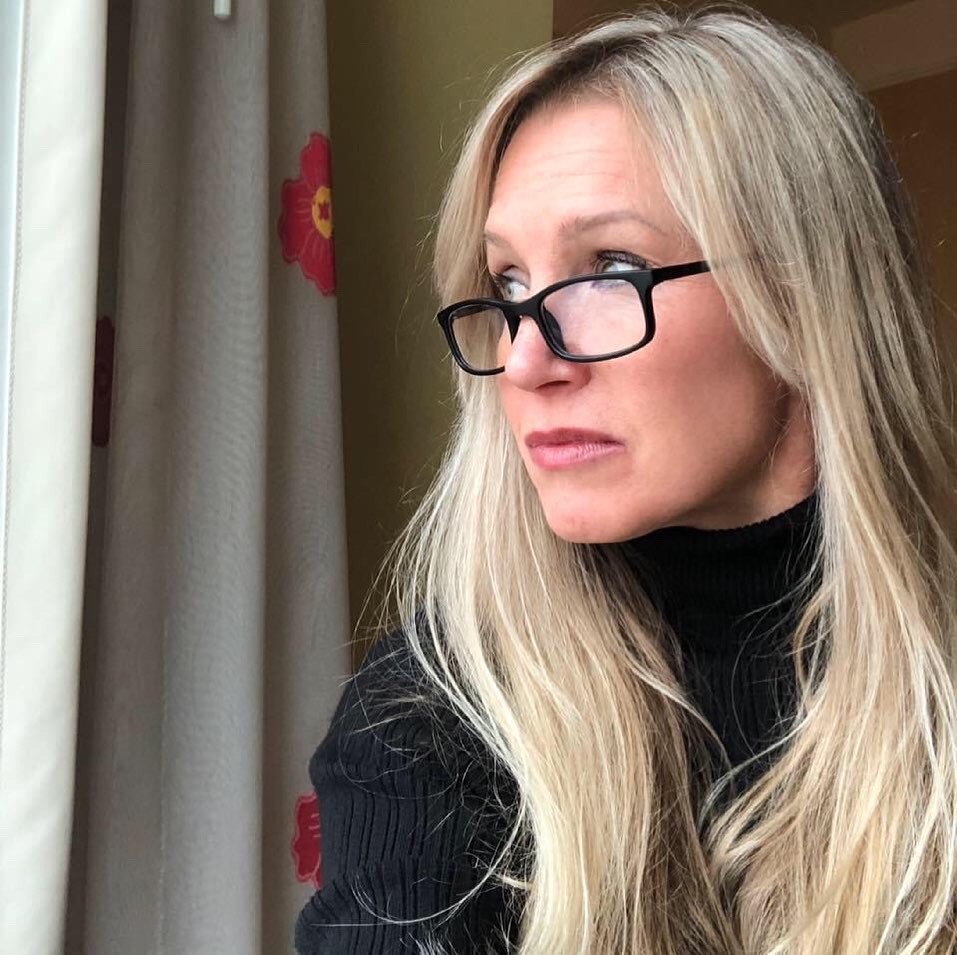
 Elizabeth Mozley Partridge, Alabama Author